 Katrina McKinnon
•
February 4, 2021
Katrina McKinnon
•
February 4, 2021
Everything You Need to Know About Great Customer Loyalty Programs
“Profit in business comes from repeat customers: customers that boast about your product and service, and that bring friends with them.” — W. Edwards Deming
You’ve maybe never heard of Deming. After all, he died in 1993 — the year before the first online retail sale was made, and before ecommerce as we know it existed.
However, he knew business, and is still considered the world’s leading thought-influencer in the area of quality management.
He set the standards that are still in use today.
He also knew customer loyalty, and the importance of bringing them back.
This is nothing new. In fact, the loyalty program is nothing new, either.
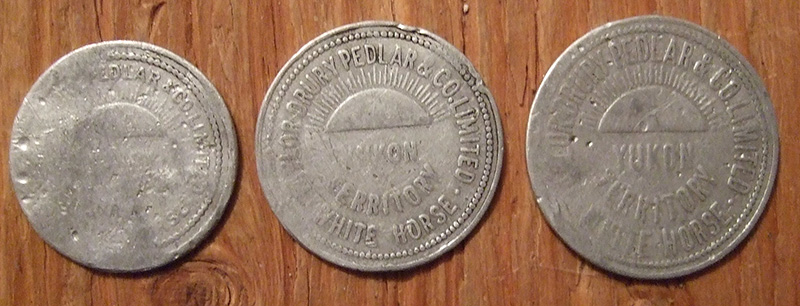
Its earliest form can be traced back to the 1700s, when shopkeepers gave copper tokens to customers that were later redeemed for products in future orders.
We like to get something when we give something — that’s the basis of a customer loyalty program. And in truth, the basis for customer loyalty itself.
Today, we’re going to take a look at customer loyalty, and how you can create a generous program that keeps customers coming back again and again.
Here’s what we’ll be discussing:
First Things First — What You Need to Know Before You Start
What Goes Where — The Elements of a Great Customer Loyalty Program
How to Put it All Together — Creating Your Loyalty Program
Let’s dive in.
The Importance of Customer Loyalty
Before we can discuss ways to keep customers buying from you, we need to look at why it’s vital to your business.
Customer Loyalty by the Numbers
The short answer is this: Repeat customers form the backbone of every successful business.
The long answer has been proven in multiple studies; we’ve used some of the results to create the list below:
- Repeat sales to loyal customers make up 65% of your business.
- Those repeat sales — from just 20% of your customers — will account for 80% of your future profits.
- Nearly 45% of all companies focus more time, effort, and money on customer acquisition than retention.
- Another 40% give acquisition and retention equal time, effort, and budget.
- Almost 85% of all companies do little to no follow up marketing.
- The odds of making a sale to a first-time customer are 19 to 1, while you have a 60% to 70% chance of making a sale every time to a returning buyer.
- A full half of loyal customers will buy more products and services, as well as more often, from their preferred brands.
- Happy customers will share their positive experiences with a company with 11 people, on average. On the other hand, unhappy ones will shout about it to at least 15.
- Customer service plays the most prominent role in customer loyalty.
- Gathering loyal customers can increase profits anywhere from 25% to 125%.
It’s easy to see that while each customer’s lifetime value on their buyer’s journey will vary, in the end a lifetime of sales determines your own company’s value.
The Elements of a Good eCommerce Loyalty Program
When you think of customer loyalty, chances are you think of things like punch cards and cashback rewards, and maybe discounts or free merch.
Some big companies like Starbucks have multiple touchpoints — an app, a rewards card, and products in retail or grocery stores that can earn you even more through that store’s program.
Yes, You CAN Have an eCommerce Loyalty Program
You, like many of our forum members, may wonder just how to do any of that with your ecommerce business.
You may think that a customer loyalty program isn’t right for you.
You’d be wrong.
You have to think of the long game when thinking about customer loyalty programs. You have assets in use right now that can keep them coming back.
Customer Loyalty Begins With Customer Service
Your overall customer experience plays a massive part in your customer retention. New customers quickly learn whether you genuinely care about them, or only care about their money.
A large percentage of customers switch companies because of bad customer service. And “bad” may not mean what you think it means.
Here are some examples of bad service from recent surveys:
- Directing customers to the website from a chat or phone agent
- Sending an email with instructions instead of personally walking them through assistance
- Switching them from agent to agent, and department to department
- Impersonal or rude treatment
- Placing policies above people
- Ignoring comments/complaints on blogs, social media, and elsewhere
- Getting “stuck” in a chatbot loop
Did you see anything in there about a lousy product? Slow delivery? Poor website design? Too many emails?
In the end, your customers want to trade their cash for a product or service from a company that cares, backed by people who measure customer loyalty not by the bottom line, but by how many people they serve.
Fix your customer service issues, and you may just fix your customer loyalty issues, too.
You’ve Got Mail, and You Know How to Use It
If you’ve got an email list of previous customers, then you’ve certainly got a mailing list for product shipping.
Regular contact with old and new customers is an excellent tool for customer retention. Weekly emails are the perfect way to educate customers on a new item you have in your inventory or about how to use one they’ve already purchased.
A monthly direct mailer can boost retention, too. A recent study found that direct mail results in 5 times the purchases than an email with the same content and wording.
That’s not to say that email isn’t a useful tool for helping customer retention — it’s just not the only way to mail someone something.
One thing you need to make sure of is your content being valuable and relevant. It can’t be all sales-sales-sale, buy-buy-buy.
Customers don’t want to be sold to. They want to be talked to.
Don’t Be a Wallflower — Get Social
Did you notice that a couple of those common customer complaints have something to do with social media?
What social media you use, and how you use it, can go to great lengths in determining customer retention and in boosting customer lifetime value.
Your customers want to feel as though they matter. They want to feel as though they belong. And they want to engage with you, as well as with each other.
That’s where your social media comes in, in a big way. It is your direct, often immediate, line to your customers.
Use it to the fullest — engage in conversation; answer questions; anticipate issues and resolve them using informative posts and links; acknowledge complaints and take the customers to a private chat.
You can also incorporate your social into your loyalty program.
Give points for signing up, following, subscribing, and so on. Offer special discounts to followers. Give them sneak peeks of new offerings.
Your customers expect a great social experience. Give them one.
Keep It Simple — It Has to Work for Them
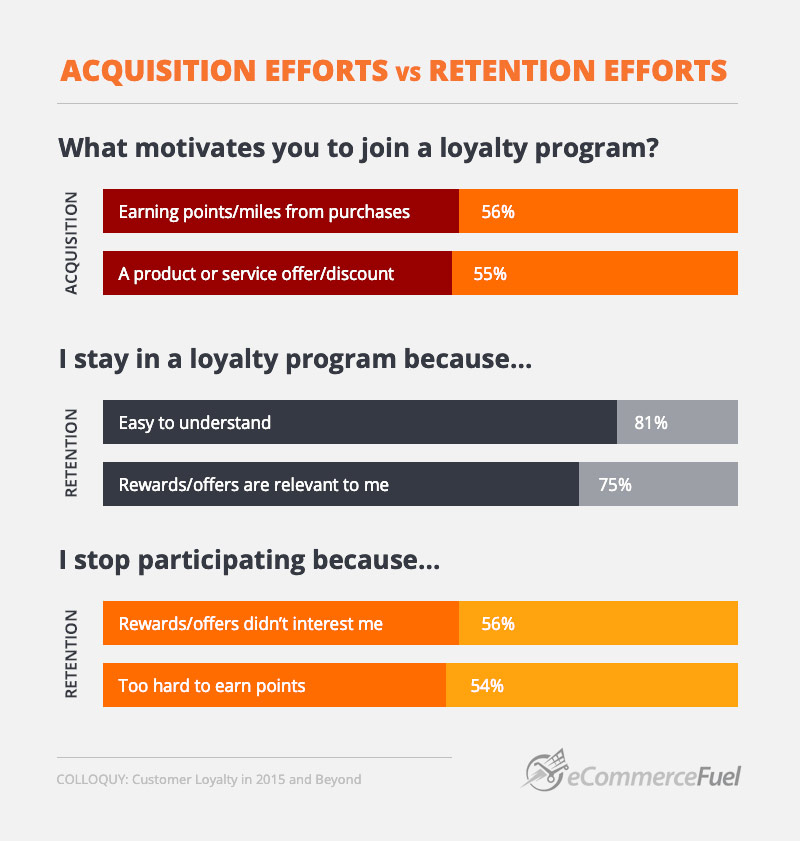
In the chart above, you can see why customers sign up for loyalty programs and why they leave them.
See that one about “easy to understand”? Customers don’t want to have to read pages of instructions. They don’t want tech that is hard to use. They don’t want to jump through hoops to earn or redeem rewards.
There are heaps of loyalty program tech and apps out there. Before you choose one, use it. Ensure that it’s easy to understand and easy to use. If not, choose another — it can make all the difference to your customers’ loyalty.
Customer experience matters.
Putting It All Together — Keeping Customers Coming Back
Whatever you offer your customers, existing ones can provide you with more sales and, yes, marketing. After all, word of mouth is a type of advertising no amount of money can buy.
Your customer loyalty program doesn’t have to be elaborate. It doesn’t have to be high tech. It just has to keep your customers happy, satisfied, buying from you, and talking about you to others.
It merely has to serve the customer, keep them informed and engaged, offer them relevant rewards, and be easy to use.
Create your own excellent customer loyalty program with those elements, and you’ll have customers buying for a lifetime.
For further reading, here are some existing loyalty programs you can look up:
- Starbucks Rewards
- Amazon Prime
- TOMS One for One
- e.l.f Beauty Squad
- Nike
- Bean Box
Photo by Freepik
Post by Katrina McKinnon
Katrina is a Charter Member of eCommerceFuel and leads an eCommerce content creation agency. Need content? Blog posts, product descriptions, category content, buyers guides, product reviews and more. Get in touch - www.copysmiths.com